Recycled polyester staple fiber (rPSF) has become one of the most important materials in sustainable textile and nonwoven manufacturing. But behind the term "recycled" lies a fairly involved industrial process — turning discarded plastic into consistent, spinnable fiber requires more than simply melting down waste. Understanding how rPSF is actually made helps buyers evaluate quality, ask better questions of suppliers, and appreciate why certain grades perform differently than others.
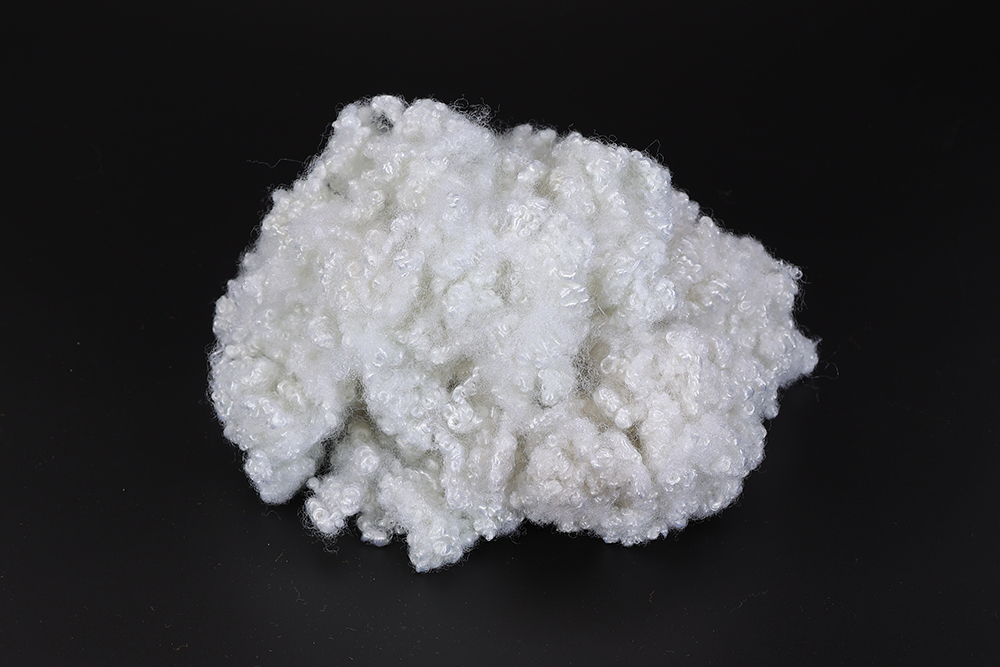
Recycled PSF is polyester staple fiber produced from recycled PET (polyethylene terephthalate) rather than freshly polymerized raw material. This distinguishes it from virgin PSF, which is made directly from PTA and MEG. Instead, rPSF starts its life as PET that has already served another purpose.
The feedstock generally falls into two categories. Post-consumer PET is the most common source, consisting primarily of used plastic bottles collected through recycling programs. Post-industrial PET, by contrast, comes from manufacturing waste and offcuts generated during PET production or processing, before the material ever reaches a consumer. Both sources can be used to produce rPSF, though post-consumer bottle recycling tends to dominate supply given the scale of bottle collection infrastructure worldwide.
Because the sustainability credentials of recycled fiber matter to many buyers and brands, certifications such as GRS (Global Recycled Standard) have become an important reference point, verifying that a supplier's recycled content and chain of custody meet defined standards.
Turning collected PET into usable fiber involves several distinct stages.
Sorting and cleaning. Collected bottles are first sorted by color and resin type, then processed to remove labels, caps, and adhesive residue. The bottles are shredded into flakes and thoroughly washed to eliminate contaminants such as dirt, food residue, and other plastic types that could compromise the final fiber quality.
Pelletizing. The cleaned PET flakes are melted and re-extruded into small pellets, sometimes referred to as recycled polyester chips. This step homogenizes the material and prepares it for spinning, similar in principle to how virgin polyester chips are produced from freshly polymerized resin.
Melt spinning. The recycled chips are melted and extruded through spinnerets to form continuous filaments, using essentially the same melt spinning technology applied in virgin PSF production. However, because recycled polymer tends to contain more residual impurities and variable viscosity than virgin polymer, additional filtration and closer process monitoring are typically required at this stage.
Drawing, crimping, and cutting. As with virgin fiber, the spun filaments are drawn to build tensile strength, mechanically crimped to add bulk and cohesion, and then cut to the required staple length before being baled for shipment.
Producing consistent rPSF is generally more demanding than producing virgin fiber, largely because the input material is inherently less uniform.
Color and purity variation. Since recycled bottle flakes originate from many different sources, achieving consistent color and minimizing visible impurities requires careful sorting and, in some cases, blending strategies to even out batch-to-batch variation.
Viscosity control. PET that has already been processed once tends to experience a drop in molecular weight and intrinsic viscosity during recycling. Left unaddressed, this can affect fiber strength and spinning performance. Manufacturers often compensate through careful control of melt processing conditions or the use of chain extenders and other additives to help restore polymer properties closer to virgin-grade levels.
Contaminant filtration. Fine impurities that survive the washing stage can cause breaks during spinning or defects in the finished fiber, making robust filtration systems an essential part of a reliable recycled fiber production line.
The value of rPSF extends beyond the finished product itself. Every ton of recycled PET used in fiber production reduces the volume of plastic waste destined for landfills or incineration, while also lowering dependence on virgin petrochemical feedstock. For many brands, incorporating recycled fiber into their supply chain is a direct and measurable way to support broader environmental and ESG commitments, and GRS-certified materials provide the documentation needed to back up those claims.
From a performance standpoint, advances in sorting, filtration, and viscosity control mean that modern rPSF can now match virgin PSF closely enough for most nonwoven and general spinning applications, even if some high-purity or light-color uses still favor virgin fiber. As recycling infrastructure and processing technology continue to improve, the performance gap between the two continues to narrow.
If you would like guidance on selecting the right recycled fiber grade for your product, our technical team is happy to help match specifications to your application.